Behavior-First Pitching Development · Ages 11–18 · Rogers, Arkansas

Teach Him How
to Train.

The lessons are good. The coaching is good. But the reps between sessions aren't happening unless you push them — and somewhere between the reminders and the arguments, you're starting to wonder if any of it is worth it. TAP Athletes' "Train Unprompted™" program teaches pitchers the structure, routine, and identity that turns between-session work into a quiet habit. The goal: he trains because of who he believes he is, not because you told him to.

The Problem
The loop every pitching family knows

Your pitcher loves baseball. He looks sharp in lessons. But the moment he's home with no one watching, the reps don't happen unless you push them.

You've tried drill sheets, apps, more lessons, rewards, and the threat of canceling altogether. None of it built the habit — because none of it addressed the actual bottleneck.

The gap isn't knowledge. He knows what to do. The gap is follow-through without external pressure. That's a trainable skill, and almost no pitching program is designed to teach it.

At TAP Athletes, mechanics and discipline develop together. Athletes who own their process don't just improve faster — their improvement compounds, because the between-session work actually gets done.

The Frustrating Loop
01
Lesson day — pitcher looks sharp. Coach is encouraged.
02
At home — the work doesn't happen. Screen time wins.
03
Next lesson — same spot. Same corrections. Progress stalls.
04
Parent — oscillates between reminders, bribes, and wondering if it's worth it.
05
Pitcher — confidence drops. Season arrives. Potential stays on the table.
The plan was never the problem. Follow-through was — and follow-through is a skill that can be built intentionally.
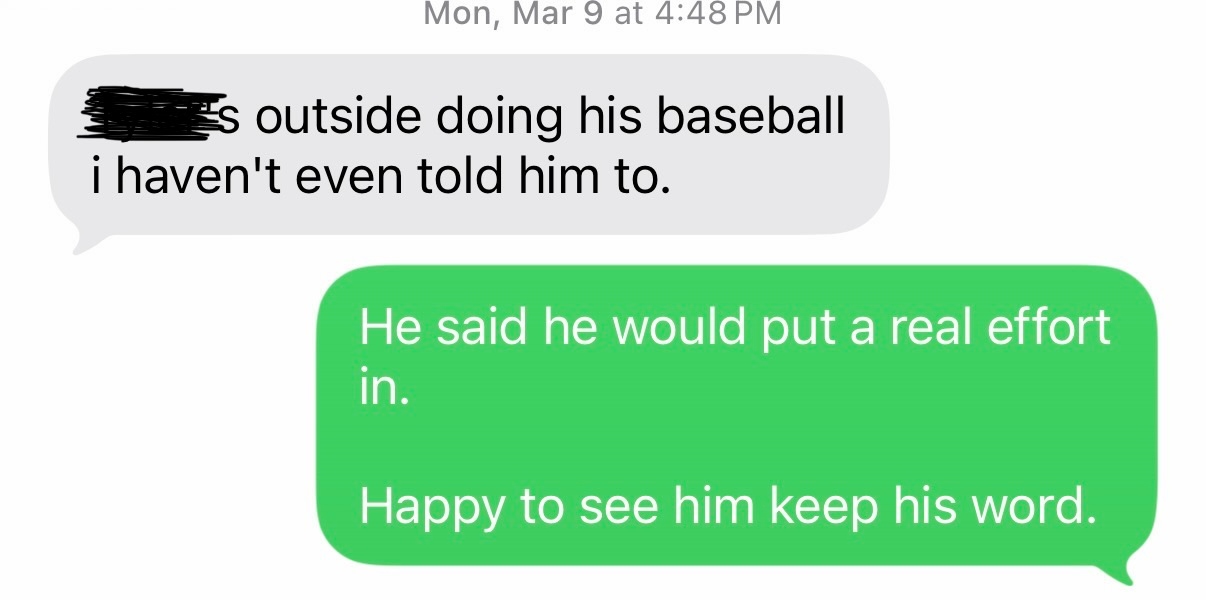
Parent text: he's outside doing his baseball, haven't told him to
"He's outside doing his baseball — I haven't even told him to."
TAP Athletes parent · Mid-program
Self-directed training without a reminder
The Weekly Rhythm
Three touchpoints per week, every week
The specific days flex around each athlete's schedule. The structure doesn't. What changes across the six weeks is who is in the room and how much the coach is doing versus the athlete. Three touchpoints. Under two hours a week total.
Day 1 · 1 Hour
Facility Session
Group, buddy pair, or one-on-one depending on the phase. Foundational pitching drills, planning, and accountability. The facility never disappears — the scaffolding does. By Phase 3, the athlete is learning to run sessions here independently.
Day 2 · 15–30 Min
At-Home Coach Visit
The coach physically shows up — backyard, driveway, garage — wherever the athlete would realistically train. This is not a video call. The coach observes the environment, builds the training setup, and works alongside the athlete in the place where habits actually form.
Day 3 · 15 Min
Recorded Video Call
The athlete runs assigned drills on camera. Coach gives feedback and answers questions. Every session is recorded so corrections stick between touchpoints. By week six, the athlete reviews his own progression across the full library of recordings.
The Program
A progressive path to ownership
Three stages over six weeks. Each one reduces external scaffolding and transfers ownership to the athlete. Discipline and skill build together — because one without the other doesn't produce a pitcher who performs when it counts.
Weeks 1–2 · Group + Coach-Led
Training Identity
Maximum support. All three touchpoints are coach-led. Each athlete begins building a personal drill library — foundational drills they understand, trust, and can run on their own. The Student-Athlete Planner is distributed on day one. Identity work opens: the coach begins drawing out who this athlete believes himself to be as a trainer.
Week 2 is the first honest data point — did the work happen without a reminder?
Weeks 3–4 · Buddy System
Identity Statement
Two athletes train together and hold each other accountable — an athlete will work harder for a peer's opinion than for a parent's reminder. The identity statement takes shape through conversation: "I'm the kind of athlete who shows up even when it's inconvenient." Written into the planner. Grounded in behavior already demonstrated, not aspiration.
By week 4, parents typically begin noticing unprompted training at home.
Weeks 5–6 · Private + Expanded Locations
The Mantra
One-on-one at the facility. The athlete sets the agenda. Home visits expand to new locations — school fields, parks, a friend's backyard — building location-independence. The identity statement compresses into a personal mantra that travels everywhere. The program closes when the athlete is ready, not when a calendar says so.
He's outside working on his mechanics. You didn't say a word.
What He Leaves With
Autonomy, competence, and proof
The outcome isn't "you stop nagging." The outcome is a young athlete who has the tools, the knowledge, and the identity to own his development.
A personal drill library he built and understands
Foundational pitching drills he trusts and can execute independently — at home, at the facility, or anywhere he has space. He knows why each drill works, not just how to do it.
The ability to source and add new training
He doesn't just follow a plan — he learns how to find new drills, evaluate whether they fit his development, and add them to his own training. The training plan he started building in Week 1 keeps growing after the program ends.
A planner full of logged work
Six weeks of documented sessions, goals, and self-assessments in the Student-Athlete Planner. Physical proof — to himself — that he is the kind of athlete who shows up and does the work.
Confidence to run his own sessions
By Phase 3, he's directing his own facility sessions with coach guidance, not coach instruction. He knows how to warm up, structure reps, and evaluate his own work. That skill doesn't expire.
Our commitment
Every athlete leaves with a personal drill library, a training plan he built himself, and six weeks of logged work in his planner. If he completes the program and isn't independently running his own training sessions, we continue working with him at no additional cost until he is. Extra check-ins in Phase 3 are always included at no charge — the program closes when the athlete is ready.
The Approach
Why the process produces the behavior

Athletes don't just learn drills. They learn why each drill works, how to execute it independently, and how to organize progressions and regressions so their training evolves as they do. By Week 6, the athlete isn't following a plan someone handed him. He's building his own.

The framework is built on Self-Determination Theory — the research-backed model for understanding intrinsic motivation in athletes. SDT identifies three conditions that shift motivation from compliance to genuine drive: autonomy (the athlete feels ownership over his training), competence (he can see and measure his own improvement), and relatedness (he's connected to peers and a standard worth meeting). Every stage of the program builds all three — progressively and intentionally.

Layered on top is habit formation science. Research shows behaviors become automatic through stable cues, consistent repetition, and time — weeks, not days. The six-week timeline is built around this. Implementation intention research shows that simple "if-then" planning dramatically improves follow-through in young athletes. That planning starts in Week 1 with the Student-Athlete Planner.

The result: the science drives the structure, the structure drives the behavior, and the behavior becomes identity. That's why it transfers — to the backyard, the school field, the facility, and anywhere else the athlete trains.

3
Autonomy · Competence · Relatedness — the SDT pillars built into every session.
6
Weeks — aligned with habit formation research on behavioral automaticity.
15+
Touchpoints — facility, home visit, and video call every single week.
Our Instructors
TAP Athletes instructors bring 12+ years of youth pitching development, high school freshman and varsity coaching experience, NFHS Level 2+ certification, and USA Baseball A, B, and C credentials. The system was developed through collegiate study in behavioral science and over a decade of applied work with young pitchers. Every session is coached from a documented process — the same structure, the same progression, every time.

Eugene Calhoun, Pitching Director — leads every intake call personally and oversees all program delivery. He's the one who answers the phone.
Secure a Seat — Free
Enrollment
Stop being the reminder

Train Unprompted™ is built for pitchers ages 11–18. Groups form based on age and availability. When we have athletes within two years of each other ready to begin, the program starts.

Sign up and we'll notify you when a group in your son's age range is forming. You'll receive a program overview before his first session — including how we work with athletes on ownership, and what you can do at home to support the process.

No payment required. We answer every question before you commit.

Three touchpoints per week — facility session, coach home visit, recorded video call.
Personal drill library and training plan built by the athlete from Week 1.
Student-Athlete Planner included. Identity arc documented throughout.
$497, six weeks. Extra Phase 3 check-ins at no charge.
Program
$497 / six weeks
15+ touchpoints · Home visits · Planner included · Ages 11–18
Join the Train Unprompted™ Waitlist
Expect a call within 48 hours from Pitching Director Eugene Calhoun. No payment required.
You're on the list. Expect a call within 48 hours from Pitching Director Eugene Calhoun.
No payment required. Spots are limited — 4 athletes per cohort.